


Does another known working key behave differently?
If you have an undamaged spare that normally opens this lock, note whether it works with gentle, normal use. One working key and one troublesome copy can point toward a key issue. It doesn't prove the cylinder is in perfect condition.
A newly cut copy that has never worked is a different clue from a familiar key that has gradually become harder to turn. Keep a visibly bent or damaged key out of the lock. Filing it or bending it back isn't a reliable fix.
Does it work with the door open?
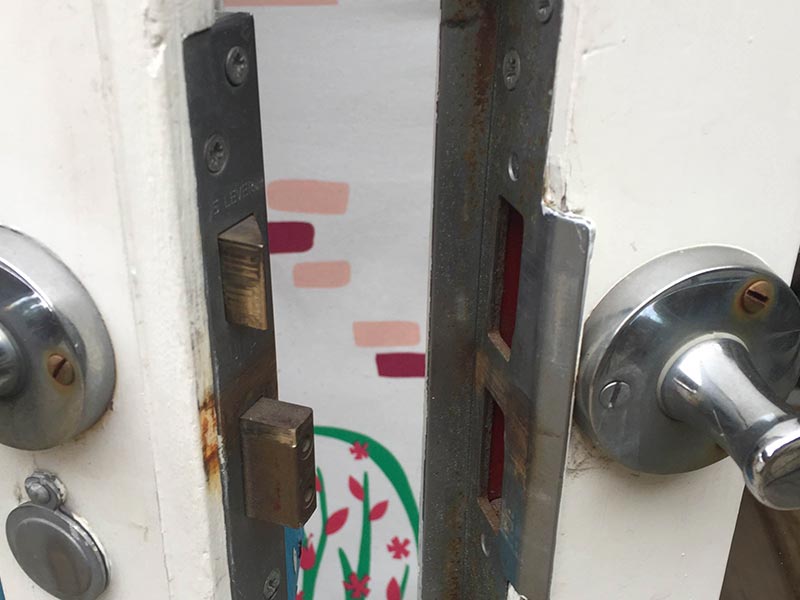
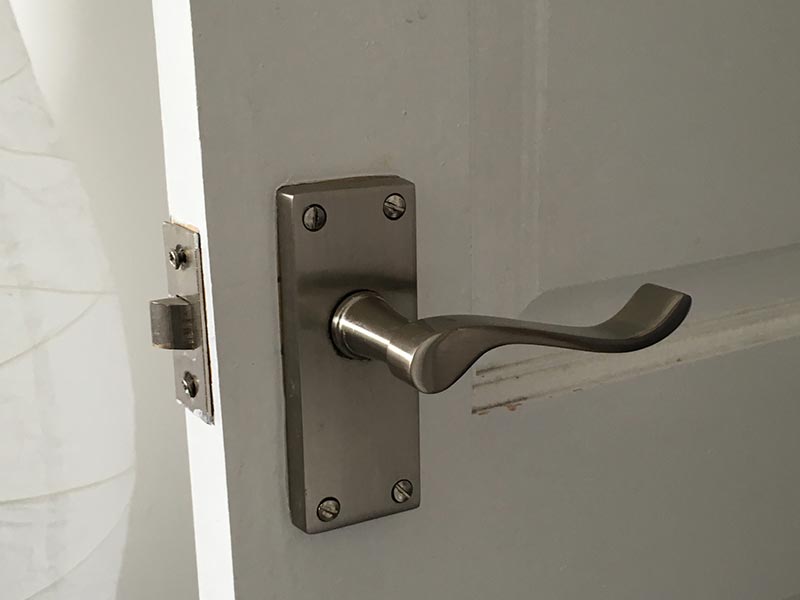
If the door is already safely open, a lock that turns normally there but binds when closed may have a door-fit problem. The bolt may be rubbing against the strike, the metal plate on the frame.
Sagging hinges, changes in the door or frame, and tight weather stripping can affect alignment. Having to lift or pull the door every time is a symptom worth fixing, even if that has become part of your routine. Rekeying won't correct that fit.
Did this start after work on the lock?
A new lock that has never turned smoothly may have an installation problem. A key that stopped working immediately after rekeying may need a different check from a lock that has worn gradually over years.
Tell the person assessing it what changed and when. Manufacturer troubleshooting differs by model, so instructions for another lock aren't a good reason to start removing parts. If the key turns but the bolt stays still, describe that too; it is a different symptom from a key that won't move.
Should you spray something into it?
Check the care instructions for your exact lock before using a lubricant. Manufacturer recommendations are product-specific; a spray suggested for one mechanism isn't automatically right for another.
Lubrication also won't straighten a door, repair a broken component or make an incorrect key fit. If a product has already been applied, mention which one. Repeatedly adding more without understanding the fault can make it harder to work out what is happening.
Repair, replacement or rekeying?
The symptom should guide the work. A key problem may need a corrected key. Door alignment needs attention at the door. A failing cylinder may need replacement while other hardware can stay.
Rekeying is about changing which key operates a suitable lock. It isn't a catch-all cure for sticking. If the door won't secure, or you're locked out, explain that first so the urgency is clear. You don't need to know the part names.
Help with an urgent lock problemA few useful questions
Why does the key turn only when the door is open?
That can point to the bolt and frame being out of alignment or pressure on the closed door. The door fit needs checking before assuming the key cylinder is faulty.
Will rekeying fix a sticking lock?
Not by itself if the cause is wear, damage or door alignment. Rekeying changes key access; the sticking problem needs a separate assessment.
What lubricant should I use in a stiff lock?
Follow the instructions for the specific lock model. There isn't one product recommendation for every lock, and lubricant won't solve a wrong key, broken part or misaligned door.
No matching questions. Try another word, or call Preebro.